
Finding Your Village: Why Support Groups Are Essential for Pain Management
As Certified Lymphedema Therapists (CLTs), we see firsthand that managing a chronic lymphatic disorder extends far beyond clinical treatments. For many patients, the day-to-day reality of tracking localized swelling and maintaining meticulous skin integrity to properly donning high-grade compression garments, can feel incredibly overwhelming (Sleigh, 2020).
However, in our clinic, we find that the physiological challenges are only half the battle. It is often the invisible, psychosocial burden, such as coping with body dysmorphia, navigating public misconceptions, and experiencing profound isolation that catches individuals off guard (Admoun & Mayrovitz, 2023).
If you have been feeling isolated by these daily hurdles, our clinical team wants to reassure you: you do not have to navigate this diagnosis alone.
Evidence-based medical research consistently demonstrates that specialized clinical intervention is just one component of a successful, long-term management plan. Integrating peer-led community support alongside expert therapeutic guidance is equally vital for improving patient outcomes and reclaiming your quality of life.
The Power of Community: What Science Says About Support Groups
It is easy to think of a support group as just a casual meetup, but science tells a different story. Broad clinical literature highlights that the psychosocial impact of chronic swelling often leads to heightened emotional distress and an altered sense of body confidence (Ridner, 2009).
A landmark randomized controlled trial published in Quality of Life Research proved just how powerful a group environment can be. The study compared women managing breast cancer-related lymphedema who received standard digital resources versus those who participated in a structured, group-based setting (Omidi et al., 2020).
The researchers discovered that group-based environments yielded significantly higher improvements in overall quality of life and psychosocial well-being (Omidi et al., 2020).
Being in a group empowers individuals, builds self-confidence, and provides a level of true social support that simple information-sharing cannot match (Omidi et al., 2020). When you see someone else thriving, it gives you a roadmap to do the same.
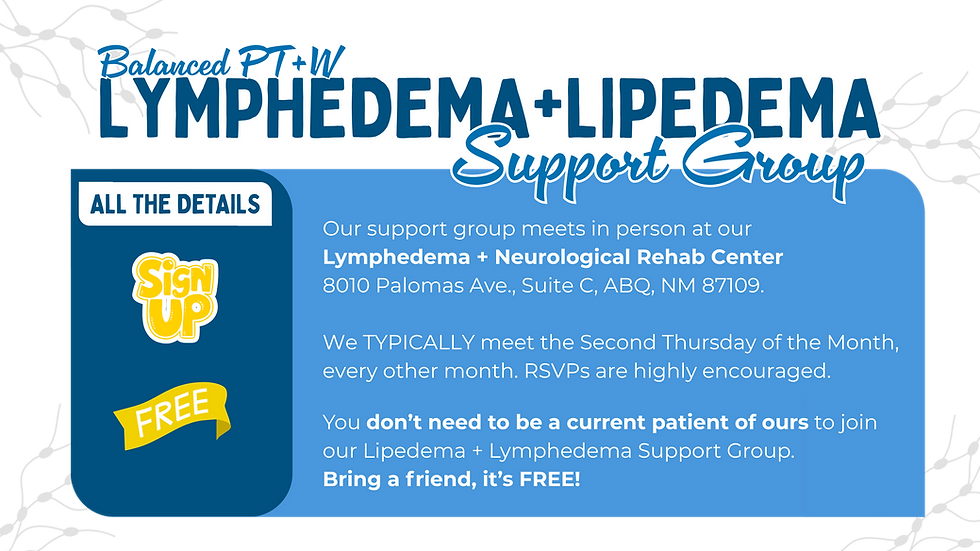
Inside Our Lymphedema Support Group: Education Meets Empathy
At our Lymphedema Support Group (+ Lipedema too), we design our meetings to be a sanctuary of both emotional comfort and expert clinical education. We look back proudly at our past sessions, which have covered an array of practical, real-world topics, including:
Skin Integrity & Infection Prevention: Practical protocols to avoid cellulitis and skin breakdown.
Garment Hacks: Honest discussions on navigating different compression styles, fabric options, and donning/doffing techniques.
Dietary Truths: Separating evidence-based anti-inflammatory nutrition choices from internet myths.
Strength Training: Giving tips and pointers on how to stay strong while navigating swelling.
What makes our circle truly unique is who sits in it with you. Our certified lymphedema therapists actively attend every single meeting.
While the core of the group belongs to the members sharing their daily victories and life hacks, our therapists are there in the room to answer complex physiological questions, demonstrate proper manual techniques, and provide professional clinical reassurance. It bridges the gap between structured therapy sessions and everyday survival in a relaxed, warm environment.
Save the Date: Join Us for Our Next Session!
Whether you were diagnosed a decade ago or are completely new to your lymphedema management journey, your seat is waiting for you. Come grab a cup of tea, listen, share if you feel comfortable, and leave with a lighter heart and a sharper toolkit.
When: July 9th at 6:00 PM
You can learn more about how a community transforms chronic care by reading the full peer-reviewed study on group-based education and lymphedema quality of life.
References
Admoun, C., & Mayrovitz, H. N. (2023). Coping mechanisms for lymphedema: An analysis of patient experiences. Cureus, 15(7), e41573. https://doi.org/10.7759/cureus.41573
Cited by: 8


